Lucid Dreaming Foundations
Learn how to become aware inside your dreams and consciously interact with your inner world.
A structured, practical approach to lucid dreaming — combining proven techniques, awareness training, dream recall development, and a deeper exploration of the mind and consciousness.
Develop lucid dreaming as a real skill rather than relying on occasional, random experiences.
Best-Selling Lucid Dreaming Course

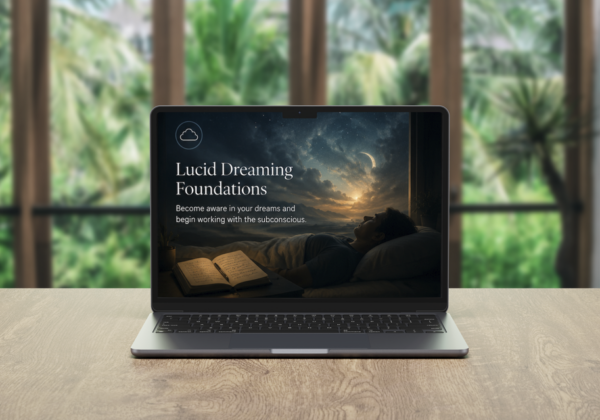
By the end of the course, you'll be able to:
By the end of the course,
you'll be able to:
- Build a sustainable lucid dreaming practice that fits your unique mind and lifestyle
- Improve dream recall and remember your dreams consistently
- Use lucid dream induction methods including DILD, MILD, SSILD and more
- Stabilise lucid dreams and remain conscious for longer
- Increase your lucid control and awareness
- Interact consciously with dream environments and dream characters
- Work skillfully with nightmares and difficult dreams
- Use meditation and awareness practices to support lucidity
Inside the course:
- 3 hours of structured video training
- My personal lucid dream case studies
- Guided meditations
- Dream journaling frameworks and practical exercises
• Build a sustainable lucid dreaming practice
that fits your unique mind and lifestyle
• Improve dream recall
and remember dreams consistently
• Use lucid dream induction methods
including (DILD, MILD, SSILD, and more)
• Stabilize lucid dreams
and remain conscious longer
• Interact consciously with dream
environments and dream characters
• Work skillfully with nightmares
and difficult dreams
• Use meditation and awareness practices
to support lucidity
• Build a long-term lucid dreaming practice
that fits your lifestyle
The course includes:
• 3 hours of structured video training
• My personal lucid
dream case studies
• Guided meditations
• Dream journaling frameworks
and practical exercises
Already had one of my first lucid dream within 3 days of course... It`s the first course I have found with such a straight forward explanation... definitely a must for anyone who wants to lucid dream.
Dinesh Sharma
It`s absolutely professional stuff, seriously. Now I understand lucid dreaming. I must listen to it once or twice more. You know very much; it is clear and not only about lucid dreams. So, I will practice and practice.
Leslie
I like everything that you are saying about lucid dreaming very much. You demonstrate the levels through which we can progress…and I think that only the sky is the limit! Thank you for sharing this, it contains huge ideas!
Valeria
A Different Approach to Lucid Dreaming
A Different Approach
to Lucid Dreaming
Most lucid dreaming advice focuses on techniques and getting results as quickly as possible.
Techniques are important. But lasting progress involves more than learning methods. It means developing attention, awareness, dream recall, emotional awareness, and a deeper relationship with sleep and dreaming.
This course brings these elements together through practical lucid-dreaming techniques, mindfulness, awareness training, dreamwork, and structured exercises. The aim is not simply to give you more techniques to try, but to help you understand how lucid dreaming works for you and develop a practice that becomes increasingly natural and consistent.
For many people, lucid dreaming begins with curiosity — flying, exploring dream worlds, or simply becoming conscious inside a dream.
With practice, however, it can open into something deeper: a way of exploring consciousness, understanding the mind, meeting recurring fears and patterns, and cultivating greater presence in waking life.
This is where lucid dreaming can become more than an unusual experience. It can become a form of inner practice.
The course draws from both modern approaches and contemplative traditions, including Tibetan Dream Yoga, while remaining grounded in direct experience rather than requiring any particular belief or worldview.
You can approach the course simply as a practical training in lucid dreaming. Or, as your practice develops, you can explore the deeper questions that dreaming naturally raises about awareness, consciousness, and the nature of experience.
When you’re ready to take your practice further, Weekly Dream Practice offers live guided sessions for ongoing lucid dreaming, dreamwork, and conscious sleep practice.
Who This Course Is For
- Complete beginners who want a clear place to start
- Experienced lucid dreamers looking for a deeper and more structured approach
- People struggling with consistency despite having tried different techniques
- Meditators and self-development practitioners interested in developing awareness through dreaming
- Curious explorers of consciousness
- Anyone looking for a grounded, yet open minded approach to lucid dreaming
You don’t need previous experience.
Even if you rarely remember your dreams, the course includes practical methods to help you develop dream recall and awareness step by step.
Course Curriculum
• Introduction and course orientation
• What lucid dreaming actually is
• Benefits of lucid dreaming and awareness training
• My personal journey into lucid dreaming and altered states
• The role of intention and mindset
• Suggested training structure and daily practice
• Different levels of lucidity and self-awareness
• Creativity, emotional insight, and healing through dreams
• Understanding dream structure and common beginner mistakes
• Building awareness both inside dreams and during waking life
• Scientific understanding of lucid dreaming and REM sleep
• Psychological and contemplative perspectives
• Working with dreams for insight and reflection
• Lucid dreaming as direct experience rather than theory
• How lucid dreaming is best learned over time
• Mindfulness practices that support lucidity
• Dream-Initiated vs Wake-Initiated Lucid Dreaming (DILD vs WILD)
• Developing awareness and emotional clarity
• How to remember dreams consistently
• Effective use of dream journaling
• Understanding REM sleep and sleep cycles
• Increasing dream energy, recall, and awareness
• Foundations for stable lucid dreaming practice
• Morning routines for dream recall
• Wake Back To Bed (WBTB)
• Reality checks and awareness training
• MILD and prospective memory techniques
• Working intentionally with dream goals
• Different levels of lucidity and self-awareness
• Creativity, emotional insight, and healing through dreams
• Understanding dream structure and common beginner mistakes
• Building awareness both inside dreams and during waking life
• Scientific understanding of lucid dreaming and REM sleep
• Psychological and contemplative perspectives
• Working with dreams for insight and reflection
• Lucid dreaming as direct experience rather than theory
• How lucid dreaming is best learned over time
• Mindfulness practices that support lucidity
• Dream-Initiated vs Wake-Initiated Lucid Dreaming (DILD vs WILD)
• Developing awareness and emotional clarity
• How to remember dreams consistently
• Effective use of dream journaling
• Understanding REM sleep and sleep cycles
• Increasing dream energy, recall, and awareness
• Foundations for stable lucid dreaming practice
Frequently Asked Questions
For most healthy adults, lucid dreaming itself is generally considered a normal variation of dreaming. Some induction practices involve briefly interrupting sleep, so the course takes a practical approach and encourages you to prioritise adequate, restorative sleep.
That’s completely fine. Dream recall is a skill that can be developed. The course includes practical methods to help you remember and record your dreams more consistently.
There is no fixed timeframe. Some people experience their first lucid dream quickly, while for others it takes longer. Progress depends on factors such as dream recall, sleep patterns, awareness, and consistent practice.
No. The course is designed to take you from the foundations upward. At the same time, experienced lucid dreamers can use the material to strengthen and deepen an existing practice.
Not necessarily. The course teaches a range of approaches, and you can choose practices that fit your lifestyle and sleep patterns. You should always prioritise healthy, restorative sleep over inducing a lucid dream.
Develop lucid dreaming
as a real skill.
✓ Lifetime Access
✓ 3 Hours of Structured Training
✓ Guided Practices & Exercises
✓ 30-Day Money-Back Guarantee